

From June 16–19, 2026, the regional conference of the Central Eurasian Studies Society (CESS) was held at Nazarbayev University in Astana, Kazakhstan. The conference was opened by CESS President, Associate Professor, and Vice Dean for Research Dina Sharipova, along with Professor of the Graduate School of Public Policy at Nazarbayev University, Riccardo Pelizzo.
The keynote lecture, titled “Quiet Power, Strategic Silence, Decolonial Diplomacy, and Transformative Resilience in Central Asia” was delivered by Dr. Timur Dadabaev. Dr. Dadabaev serves as Professor of International Relations and Director of the Special Program for Japanese and Eurasian Studies at University of Tsukuba. He is also a Visiting Professor under the Swedish Research Council at Lund University, as well as Professor of International Relations and Vice-Rector for Research and Innovation at the University of World Economy and Diplomacy under the Ministry of Foreign Affairs of Uzbekistan.
Throughout the conference, attendees enjoyed a book exhibition and the Living Cultural Heritage Exhibition, curated by Professor of Anthropology and Sociology at Nazarbayev University, Snezhana Atanova. Some of the exhibits came from her personal collection.
The evening banquet featured a musical concert with performances by Dr. Merey Otan (Eurasian Studies, Nazarbayev University) and the Nazarbayev University Orchestra.
Around 400 participants from different countries attended the conference. More than 100 panels, roundtables, and book presentations were held. We thank the organizers for the excellent arrangement of the conference and the participants for their insightful presentations.
The conference was attended by researchers from the Institute: Botagoz Rakisheva – Director; Kalamkas Yesimova – Chief Researcher; Aruzhan Komirtaу – Junior Researcher; and Eliott Barrois – Research Intern at the Institute and Master’s student at the Graduate School of Social Sciences (France).
As part of the conference, the Research Institute Public Opinion organized a panel titled: «Кazakh/Кazakhstani diaspora: adaptation strategies, identity, and new trends». Among the panel participants was renowned researcher of the Kazakh diaspora, Professor Peter Finke (Switzerland).
Moderator: Botagoz Rakisheva, Research Institute Public Opinion (Astana, Kazakhstan). Discussant: Sanchel Kim, Institute of Central Asian Studies, Hankuk University of Foreign Studies (Seoul, South Korea). Panel Speakers: Gulnash Askhat and Lyazzat Aitimbet (Turan University). Presentation: The Kazakh Diaspora in the United States: Risks of Losing National Identity. Anar Somonzhoglu (Hacettepe University, Ankara, Turkey). Presentation: Turkish Diaspora Policy and Kazakhs in Europe. Kalamkas Yesimova (Astana IT University, Public Opinion Research Institute), Ainur Ibraeva, and Aruzhan Komirtaу (Public Opinion Research Institute). Presentation: New Trends in the Formation of the Kazakh/Kazakhstani Diaspora. Beibitgul Khaumen (Mongolia). Presentation: Being Kazakh in Mongolia: Everyday Nationalism and the Politics of Belonging.
More details: https://opinions.kz/ru/merop/the-central-eurasian-studies-society
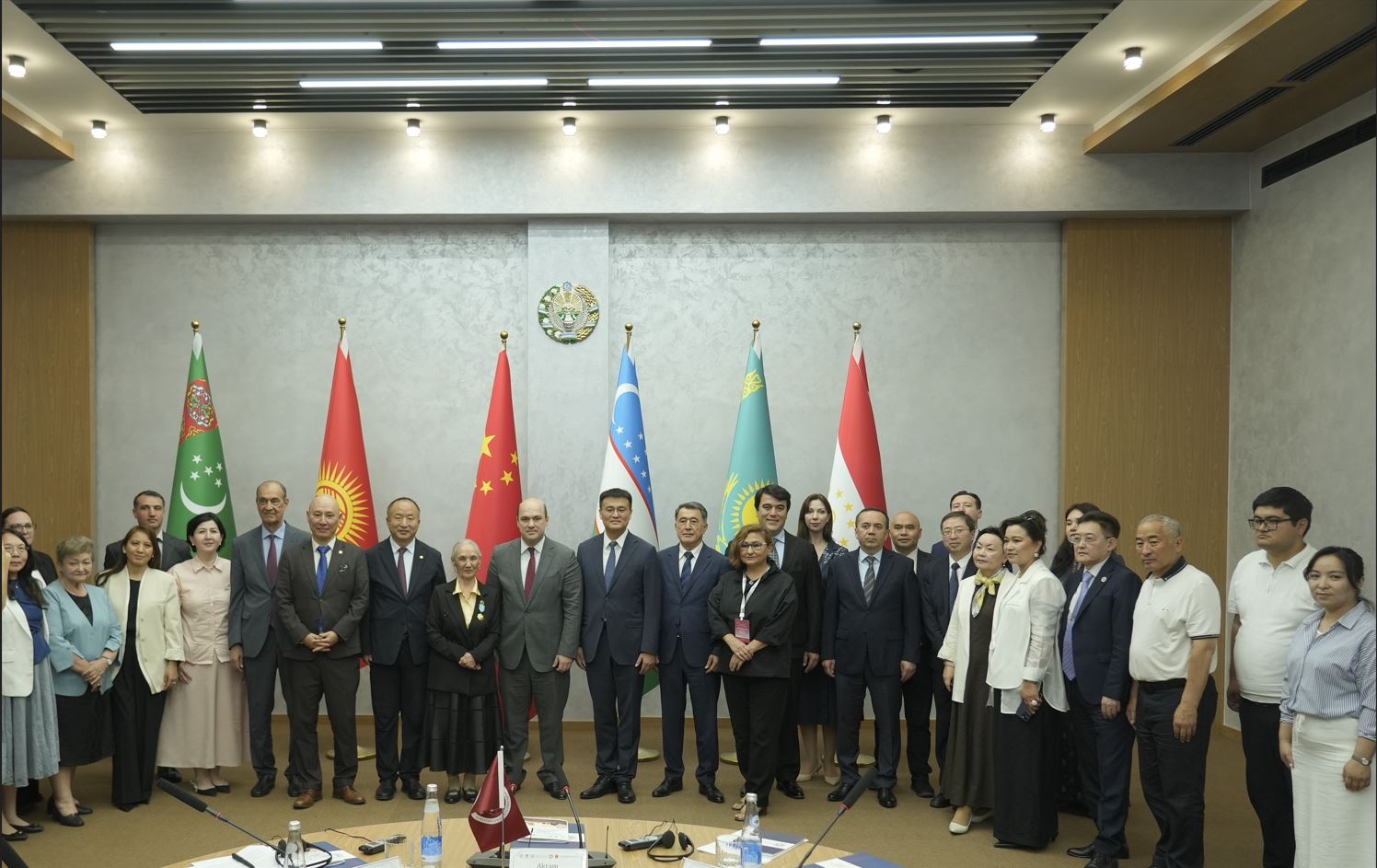
On June 13, 2026, the Second Central Asian Forum on China Studies was held at the University of World Economy and Diplomacy (Tashkent, Uzbekistan) under the theme «Central Asia and China at the Crossroads of Heritage and Future».
The Forum was organized by the Institute for Advanced International Studies at the University of World Economy and Diplomacy, in cooperation with the World Center for Sinology and the Belt and Road Research and Education Center (Kazakhstan), with the support of the Embassy of the People's Republic of China in Tashkent. The event continued the regional expert dialogue initiated in Almaty in May 2025 and aimed to strengthen academic, analytical, and cultural-humanitarian cooperation between Central Asian countries and China. Kalamkas Yessimova, Chief Researcher at the Research Institute Public Opinion took part in the Forum.
More details: https://www.uwed.uz/ru/news/1610

On June 11, 2026, as part of the 1st Summer School «From Social Theories to Manageable Data: Building Hybrid Competencies (Social Science * Digital * Policy)» organized by the Institute of Philosophy, Political Science and Religious Studies, Botagoz Rakisheva delivered a lecture within the module «Data Infrastructures in Social Research: Databases, Platforms, and Research Ecosystems». During the lecture, she introduced participants to international databases and their role in comparative research, including World Values Survey, Global Barometer, and Eurasian Monitor. She also discussed international associations such as WAPOR, ISA, and ESOMAR, as well as ethical codes and standards in social research.
More details: https://iph.kz/ru/events/i-letnyaya-shkola-den-4/

On June 1–2, 2026, the Sociologists’ Forum titled«Social Research in the Digital Age: Trends and Challenges» was held in Almaty. The forum was organized by the Kazakhstan Institute for Strategic Studies under the President of the Republic of Kazakhstan (KISI) jointly with Narxoz University. The forum brought together sociologists from governmental and non-governmental research centers, the academic community, as well as master’s and doctoral students from universities. The forum was attended by the Director of the Institute, Botagoz Rakisheva, and Chief Research Fellow Kalamkas Yessimova.
More details: https://kisi.kz/ru/forum-sochiologov-posvyashhennyj-sochissledovaniyam-v-epohu-chifrovizachii-nachal-rabotu-v-almaty/
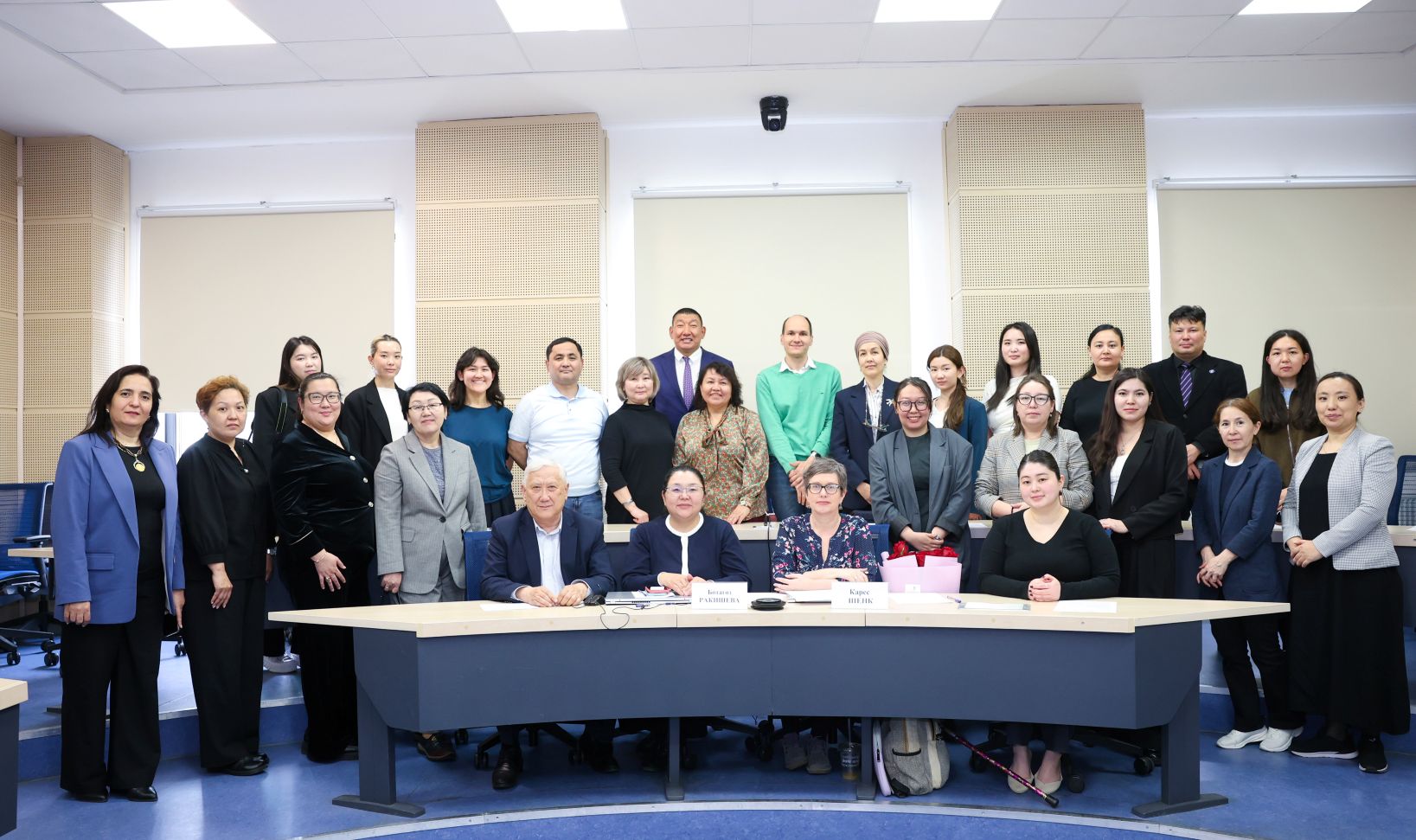
On May 13, 2026, the Fourth Scientific Seminar titled «Migration Trends in Central Asia: External and Internal Factors of Influence» was held at Nazarbayev University.
The organizers were the Public Opinion Research Institute, the School of Sciences and Humanities, and the Graduate School of Public Policy of Nazarbayev University.
The First joint scientific seminar, «Labor Migration: Problems, Solutions, and Prospects» was held on January 22, 2016. Within the framework of this seminar, the results of a sociological survey of labor migrants conducted by the Public Opinion Research Institute on behalf of Nazarbayev University were presented.
On November 22, 2019, the Second Scientific Seminar was held at Nazarbayev University, organized by the School of Sciences and Humanities, the Nazarbayev University Library, and the Public Opinion Research Institute. The keynote speaker in the panel discussion was migration specialist António Mendonça, with a presentation titled «Migrants from Central Asia in Western Europe: Numbers, Mobility, Profiles, Identity»
On December 4, 2020, the Third Scientific Seminar titled «Illegal Migration from Kazakhstan to South Korea» was held at the site of the Kazakhstan Council on International Relations (KCIR). The seminar was organized by the Kazakhstan Council on International Relations (KCIR), the Public Opinion Research Institute, and the School of Sciences and Humanities of Nazarbayev University.
More information is available on the website of the Public Opinion Research Institute:
https://opinions.kz/en/events/scientific-seminars-on-migration
Moderators: Kares Shenk (Nazarbayev University), Botagoz Rakisheva (Public Opinion Research Institute).
Speakers at the seminar included:
Kares Shenk, Associate Professor, Department of Political Science and International Relations, Nazarbayev University, with the presentation «Difficulties of Researching Migration in Kazakhstan»,
Ayaulym Sagynbayeva, Head of the Center for Analysis and Forecasting of Demographic Processes, Bureau of National Statistics of the Agency for Strategic Planning and Reforms of the Republic of Kazakhstan, Founder of the Association of Demographers of Kazakhstan, with the presentation «Assessment of Current Migration Trends in Kazakhstan and Central Asian Countries»,
Leila Delovarova, Acting Professor, Department of International Relations and World Economy, Al-Farabi Kazakh National University, with the presentation «New Migration Trends and Directions in Central Asia»,
Nurkhan Zhaliyev, Managing Director of the Department of Analysis and Strategic Development, Otandastar Foundation, with the presentation «Compatriots Abroad as a Strategic Resource for Kazakhstan’s Development: From Symbolic Ties to Pragmatic Engagement Mechanisms»,
Kalmakas Yessimova, Master of Anthropology and Ethnology, Public Opinion Research Institute, Astana IT University, with the presentation «Key Trends of Chinese Migration in Kazakhstan»,
Vladimir Kozlov, Associate Professor, Graduate School of Public Policy, Nazarbayev University, with the presentation «Key Factors Affecting Fertility Intentions of Russian Migrants in Central Asia».
Online commentator: Dr. Larisa Kangaspuro, Aleksanteri Institute, University of Helsinki.

On April 2, 2026, the Institute for Applied Ethnopolitical Research published the monograph «National Unity of Kazakhstan: History, Contemporary Developments, and New Trends».
The monograph was prepared within the framework of the research program IRN BR18574231 «Scientific and Methodological Foundations of Nation-Building in Kazakhstan: Assessment of Current Conditions, Trends, and Projection/Evaluation Models for the Development of a Multiethnic Society». It consists of eight key sections devoted to nation-building and national unity in Kazakhstan.
The authors of the monograph are members of the Scientific and Expert Council of the Assembly of the People of Kazakhstan. Among them are demographers, sociolinguists, historians, sociologists, political scientists, and legal scholars who have been systematically studying issues of national unity and social cohesion for the past 15 years.
The book explores both theoretical and practical aspects of state policy aimed at fostering civic identity and integrating diverse ethnic groups. The monograph will be useful for public administration professionals, a wide range of experts, members of the Assembly of the People of Kazakhstan, as well as undergraduate, master’s, and doctoral students researching this field.
Researchers from the Public Opinion Research Institute – Botagoz Rakisheva, Ainur Ibrayeva (Mazhitova), and Gulden Ashkenova – authored the chapter «Conflict Prevention: Development of the Ethnomediation School of the Scientific and Expert Council of the Assembly of the People of Kazakhstan». The chapter provides a detailed overview of the development of ethnomediation since 2011, the contributions of international mediators such as Prof. Tatyana Dronzina, Prof. Antonio Lozano, Prof. Jorge Bolaños, Prof. Rafael Grasa, and other colleagues, as well as the formation of the Kazakhstani school of ethnomediators.
More details: https://iaer.kz/en/item/477-monografia-nacional-noe-edinstvo-kazahstana-istoria-sovremennost-i-novye-tendencii

On March 31, 2026, the journal SOCIOLOGY.KZ was published – a specialized academic journal dedicated to current issues in sociological science and related disciplines. The journal publishes scientific, theoretical, and methodological works in sociology, as well as sociological aspects of social, economic, and political processes. It is issued four times a year. The founder and publisher of the journal is the Institute of Philosophy, Political Science and Religious Studies of the Science Committee of the Ministry of Science and Higher Education of the Republic of Kazakhstan.
In the first issue of the journal, the article «INTERNATIONAL EDUCATIONAL MIGRATION: THE CASE OF KAZAKHSTAN» was published. The article was prepared by the researchers of the Public Opinion Research Institute: Botagoz Rakisheva, Kalamkas Yessimova, Ainur Ibrayeva, and Mayra Raushanbekova. This article is part of a long-term research project of the Public Opinion Research Institute, which has been carried out by the institute’s staff since 2006. The institute has consistently conducted research on various types of migration, including educational, labor, marriage, ethnic, and other forms of migration within different projects. Within the framework of these projects, surveys of Kazakhstani student migrants studying in various countries around the world have been conducted, including South Korea, Turkey, the United States, Russia, China, and others. The article is based on the results of a research project launched in 2025, which focuses on studying public opinion among international students studying in Kazakhstan. Part of the findings of this study are presented in the article. The object of the study includes Kazakhstani students studying abroad and international students studying in Kazakhstan. The aim of the study is to identify students’ motivations and to determine key trends in educational migration processes. The objectives of the study include: examining the adaptation process of educational migrants; identifying factors influencing university choice; analyzing the main motivations for selecting a country of study; identifying key challenges in adaptation in the host country; studying migration potential; and exploring further educational trajectories. The main research methods include in-depth interviews, surveys, case studies, comparative analysis, and statistical analysis.
For more information: https://journalsociology.kz/index.php/js
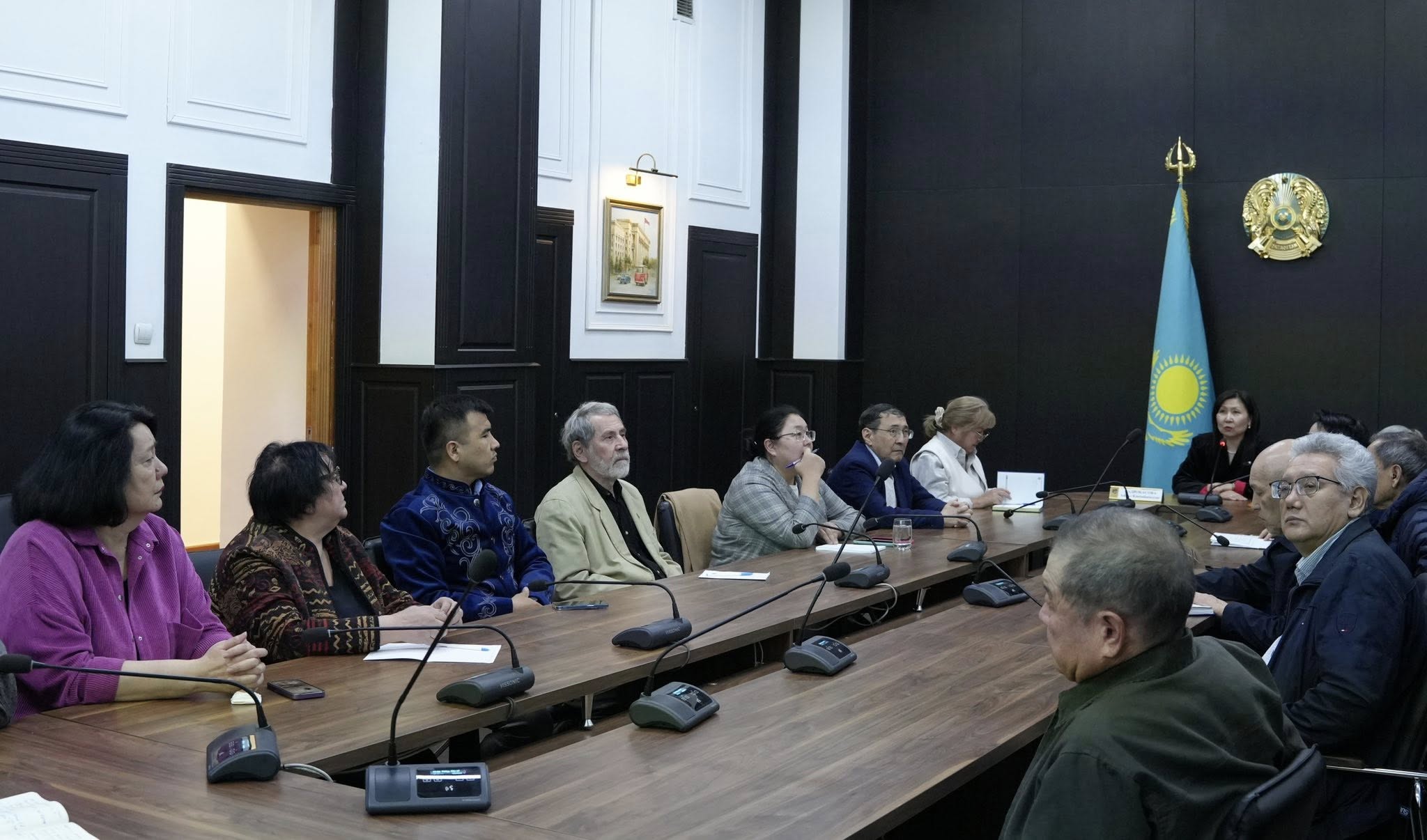
On March 27, 2026, an expert meeting dedicated to current issues of identity in the modern world was held at the Institute for Philosophy, Political Science and Religious Studies.
The speaker of the event was Botagoz Rakisheva, Candidate of Sociological Sciences, Director of the Public Opinion Research Institute, Acting Associate Professor at the National School of Public Policy of the Academy of Public Administration under the President of the Republic of Kazakhstan, member of ESOMAR, national representative of WAPOR in Kazakhstan (2021–2025), and head of the World Values Survey-7 project in Kazakhstan.
Botagoz Islyamovna Rakisheva delivered a presentation titled «Multiple Identity: The Case of the Kazakh Diaspora». The presentation examined the features of the formation and transformation of identity among representatives of the Kazakh/Kazakhstani diaspora living in different countries. Special attention was paid to the interaction of national, cultural, linguistic, and zhuz/tribal identities.
Among the invited guests were Klara Khafizova, Professor, Doctor of Historical Sciences, and orientalist scholar, as well as Kalamkas Yessimova, Chief Researcher at the Public Opinion Research Institute.
More details: https://iph.kz/ru/events/ekspertnaya-vstrecha-botagoz-rakisheva/
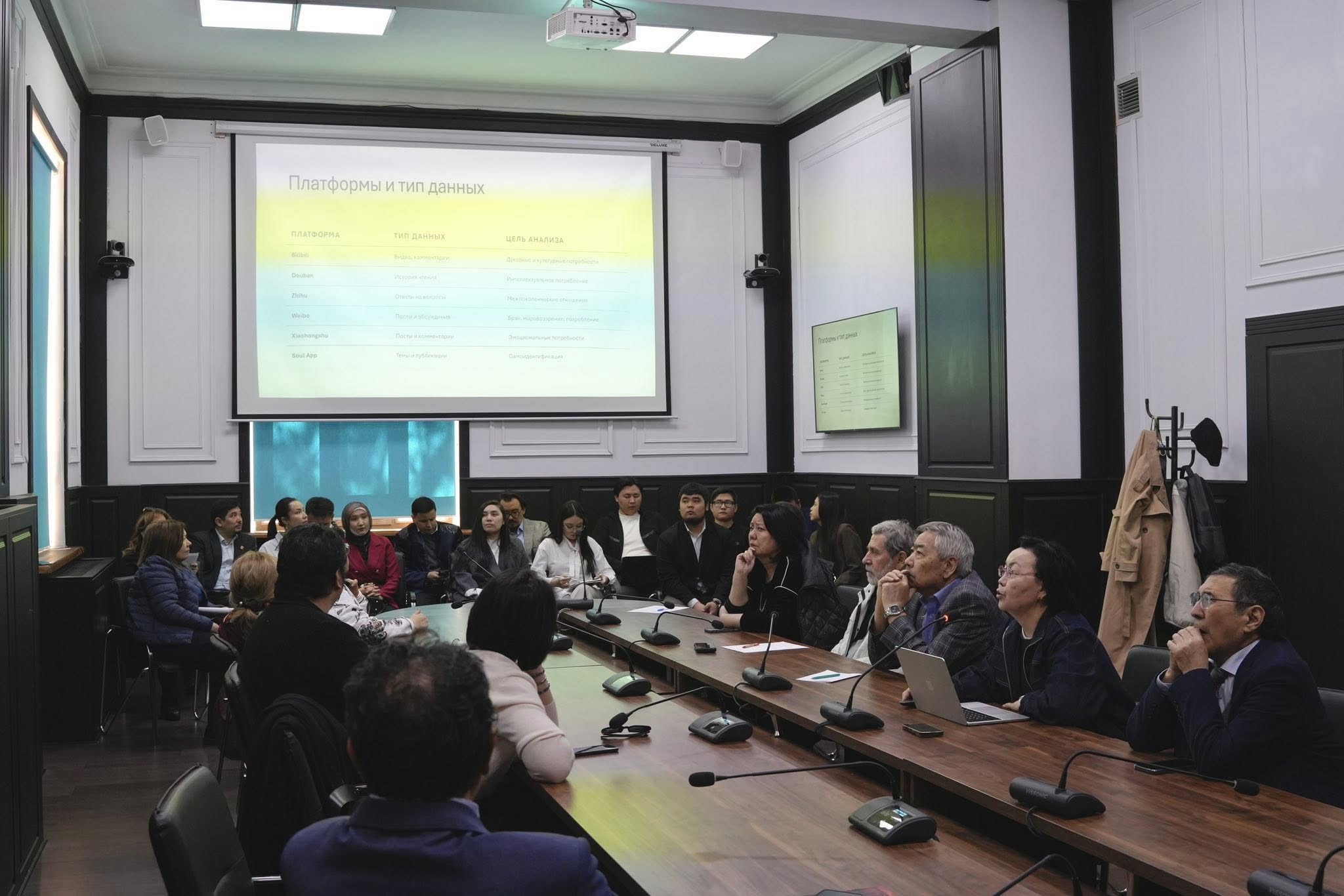
On March 26, 2026, an expert meeting was held at the Institute for Philosophy, Political Science and Religious Studies with the participation of Kalamkas Yessimova, Master of Anthropology and Ethnology, Chief Researcher at the Public Opinion Research Institute, and Senior Lecturer at Astana IT University.
Kalamkas Saurbayevna delivered a presentation titled «Sociological Studies of Youth in China», which focused on contemporary approaches to studying youth in China and the specifics of implementing state youth policy.
Among the invited discussants were Kazakhstani experts: German Kim, Professor, Doctor of Historical Sciences, Director of the Institute of Asian Studies at Al-Farabi Kazakh National University; Marat Shibutov, Deputy Director of the International Institute of Sociology and Politics; Natalya Malyarchuk, Director of a consulting company and member of the Public Chamber under the Mazhilis; and Botagoz Rakisheva, Director of the Public Opinion Research Institute.
More details: https://iph.kz/ru/events/ekspertnaya-vstrecha/

On January 27, 2026, the Public Opinion Research Institute (Astana, Kazakhstan) and the Institute of Central Asian Studies at Hankuk University of Foreign Studies (Seoul, Republic of Korea) held a joint scientific seminar titled “Contemporary Youth: Characteristics, Values, and Interests.”
During the seminar, researchers from Kazakhstan, the Republic of Korea, and Turkey discussed contemporary youth in their countries, as well as the life values and priorities, interests, and goals of different generations. What values and orientations shape young people today? What matters most to youth? What are their interests? How do generations differ from one another? What are their visions of the future? Who are they—the people of the future?
The seminar featured the following presentations: Sancheol Kim, PhD, Professor and Research Fellow at the Institute of Central Asian Studies, Hankuk University of Foreign Studies (Seoul, Republic of Korea), with a presentation titled “Characteristics of the Millennial Generation in the Republic of Korea and Central Asian Countries (Kazakhstan and Uzbekistan)”,
Shaimerdenova Sabina Anuarbekkyzy, MA in Sociology, Head of the Department of Sociological Research and Forecasting at the Research Center “Youth” (Astana, Kazakhstan), with a presentation “Youth of Kazakhstan: Profile, Values, Future”,
Anar Somuncuoglu, PhD, Associate Professor, Hacettepe University (Ankara, Turkey), with a presentation “Contemporary Youth in Turkey”,
Kalamkas Yesimova, MA in Anthropology and Ethnology, Public Opinion Research Institute, Astana IT University (Astana, Kazakhstan), with a presentation “Sociological Research on Youth in China.”
Representatives of various organizations took part in the seminar, including the Kazakhstan Institute for Strategic Studies under the President of the Republic of Kazakhstan, the Institute of Applied Ethnopolitical Studies, the Otandastar Foundation (NAO), Astana IT University, the Astana Hub of Civil Service, L.N. Gumilyov Eurasian National University, the Academy of Public Administration under the President of the Republic of Kazakhstan, the Association of China Studies Researchers.
Moderator of the scientific seminar: Botagoz Islyamovna Rakisheva, Director of the Public Opinion Research Institute, Candidate of Sociological Sciences, and Acting Associate Professor at the National School of Public Policy, Academy of Public Administration under the President of the Republic of Kazakhstan.
For more information: https://opinions.kz/ru/merop/nauchnye-seminary